

Support me on – https://www.patreon.com/Ashif
Support me on – paypal.me/9953280644
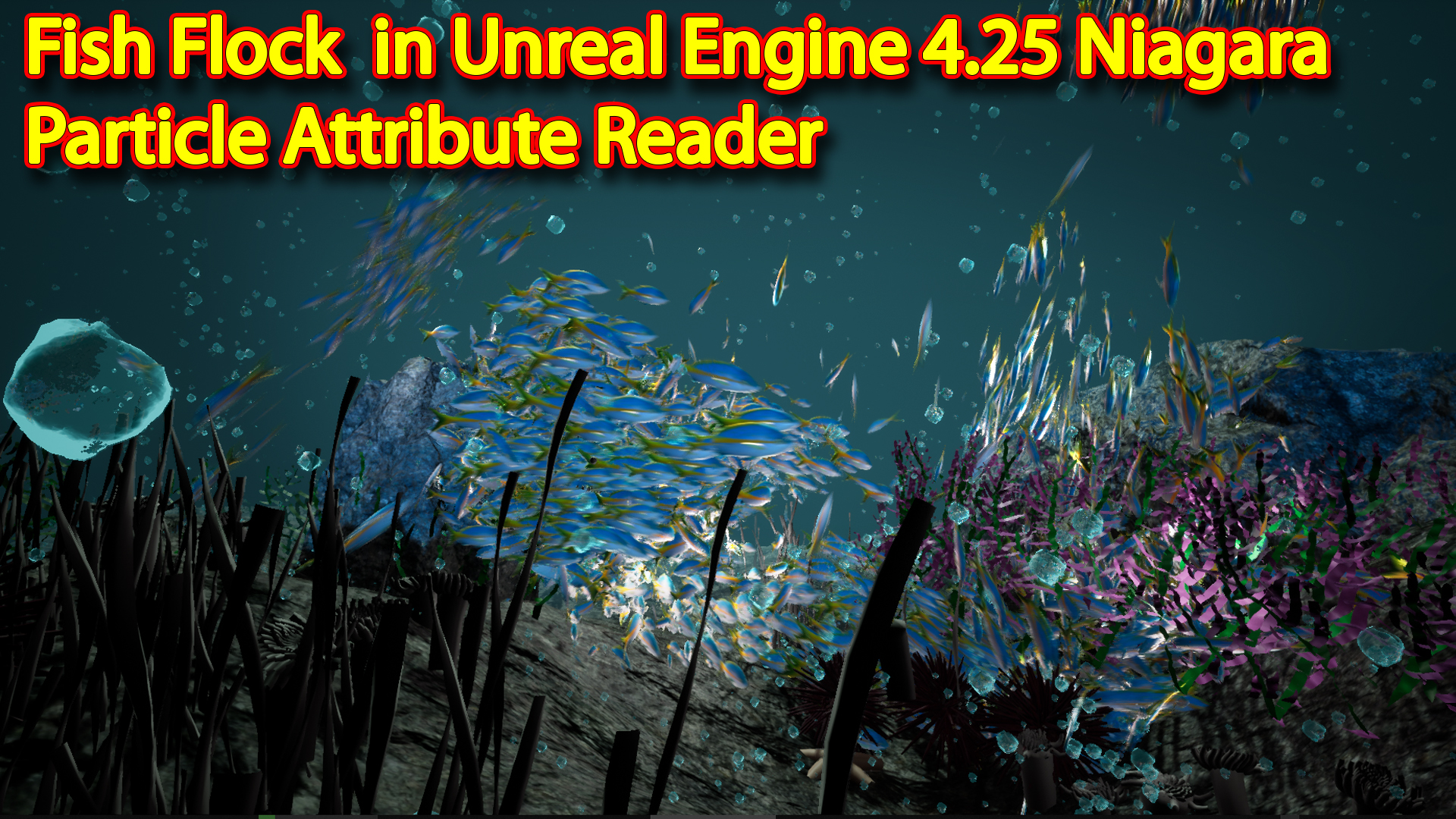
hi guys i have created this under water scene in unreal engine 4.25 i used Niagara new tool Particle Attribute reader data interface for fish flocks and other Niagara system is bubbles i have also animated fish in material that i will show you in this video.
#cghow #RealtimeVFX #UE4Niagara #gamefx #ue4vfx #ue4fx #niagara #unrealengineniagara #unrealenginevfxtutorials
●Upload Your Tutorials/Work – https://cghow.com/
…………………………………………………………………………………………………………
Purchase Effect Package From Unreal engine Marketplace –
●Niagara Effects Pack – http://bit.ly/2LWgZTx
●Advanced Magical FX – http://bit.ly/2XQYyXL
……………………………………………………………………………………………………………………………………
●Patreon – https://www.patreon.com/Ashif
……………………………………………………………………………………………………………………………………
●Follow FB Page – https://www.facebook.com/cghow0/
●Join FB Group – https://www.facebook.com/groups/cghow/
……………………………………………………………………………………………………………………………………
●Android App – http://bit.ly/2XUnhoR
……………………………………………………………………………………………………………………………………
Playlists-
●Unreal Engine Niagara Tutorials – http://bit.ly/2SmPEuT
●Unreal engine VFX Tutorials -http://bit.ly/2JNXyJZ
●Unity VFX Tutorials – http://bit.ly/2XNGlKz
……………………………………………………………………………………………………………………………………
●Discussion & Help Forum – http://bit.ly/2Lo0Er7
……………………………………………………………………………………………………………………………………


Video Transcript Summary: “Underwater Scene in Unreal Engine Niagara using Particle Attribute Trigger”
- Introduction
- Asif Ali introduces the underwater scene created in Unreal Engine using Niagara, specifically highlighting the new Particle Attribute Trigger tool in Unreal Engine 4.25.
- Scene Setup
- The scene consists of two particle systems: bubbles and fish. The fish particle system utilizes the Particle Attribute Trigger, while the bubbles use basic particles.
- Creating the Fish Attractor System
- The fish particles are designed to follow red attractor particles. Asif demonstrates how to create a new emitter and adjust spawn rates and colors.
- The green particles (representing fish) are set to follow the red particles by using the Particle Attribute Trigger tool.
- Using Particle Attribute Trigger Tool
- A custom module is created using the Particle Attribute Trigger tool to allow the fish particles to follow the red particle positions.
- A random ID is used to make the fish follow different red particles instead of a single one.
- Attractor Settings
- The attractor’s strength and radius are adjusted to make the fish follow the red particles more effectively.
- Asif demonstrates how to apply curl noise and drag for more realistic movement.
- Fish Movement and Animation
- The fish movement is further controlled using random settings such as velocity orientation, drag, and collision with other objects (e.g., rocks).
- Fish animation is controlled via a custom material that includes a dynamic parameter for random distortion of the fish’s movement.
- Bubbles Setup
- Bubbles are set to rise with random movement using a material that distorts the bubble appearance.
- Asif explains the bubble particle setup, including random scaling, rotation, and the use of trails to follow the bubbles.
- Additional Settings and Effects
- The scale of the scene is increased to make the particles move on a larger scale. Simple grass wind effects are applied to materials to simulate natural movement.
- Visibility of the attractor system is adjusted for better visual clarity.
- Outro
- Asif encourages viewers to comment their thoughts and ideas for future tutorials using the new Particle Attribute Trigger tool.
- He also invites comments about any queries related to the video.
Key Takeaways
- The Particle Attribute Trigger tool allows for advanced control over particle behaviors, such as making one particle system follow another.
- Randomization of particle behavior (ID, movement, size, and speed) enhances the realism of particle interactions.
- The fish animation uses a dynamic material with random distortion to simulate fluid-like motion.
- Bubble particles are set to rise with random movement, and trails are used for visual effect.
Trendy Tags:
- #UnrealEngine
- #NiagaraVFX
- #ParticleAttributeTrigger
- #UnderwaterScene

Leave a Reply